
Earth Pigment Art: The Complete Guide to Natural Pigment Paintings
by Meghan Geliza Jackson
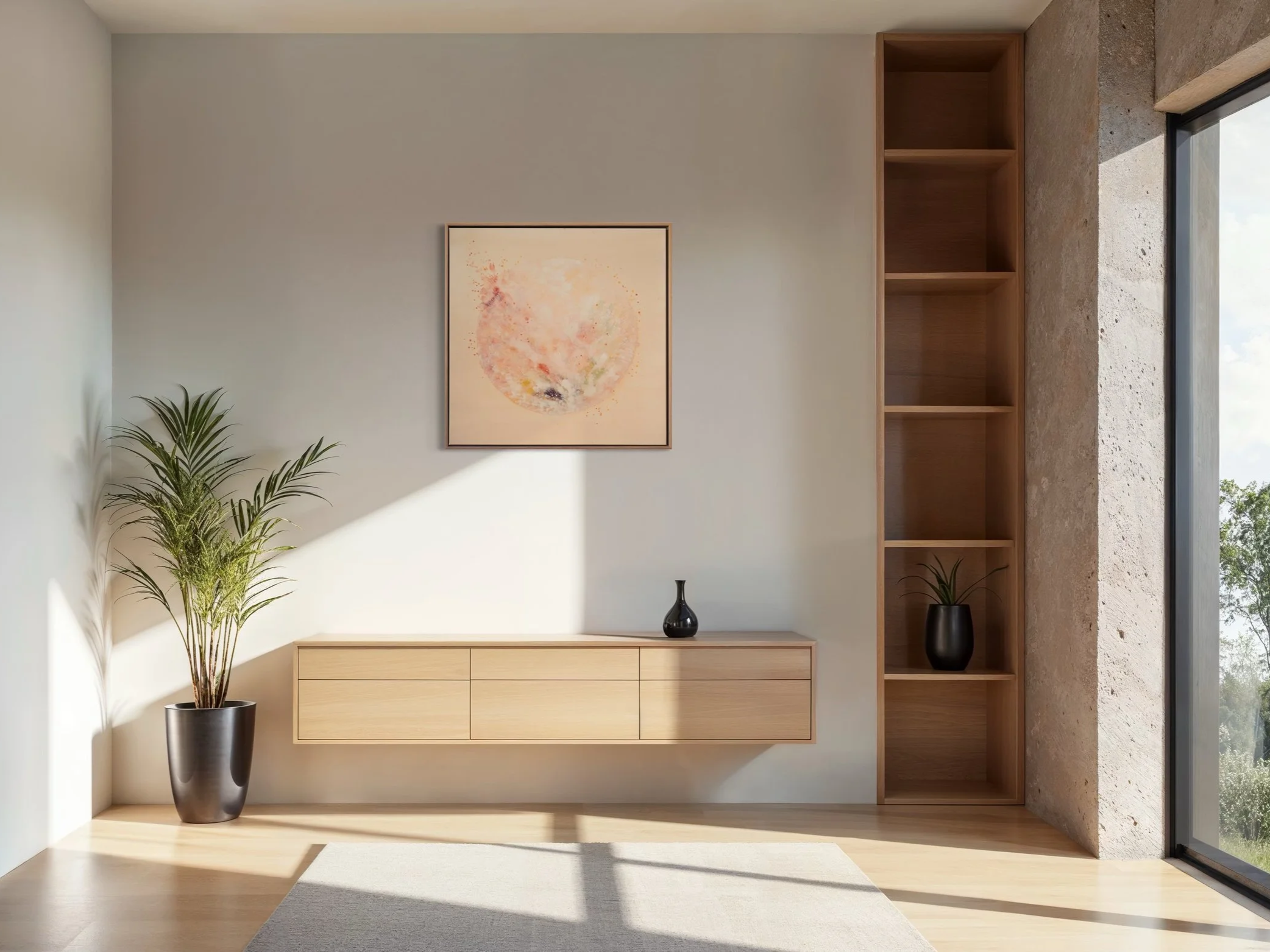
When you stand before an earth pigment painting, something shifts within you. The colours feel different, quieter, more grounded. The textures, the grit, evoke ancient, visceral memory.
A call to something very primal within us.
Earth pigment art connects us to something our overstimulated nervous systems desperately need: the actual earth beneath our feet.
In a world of fast, synthetic everything, these paintings carry the resonance of the slow hum of nature: red clay from riverbanks, raw umber from cliffside walls, our stone and mineral kin formed slowly for over a millennia.
If you've felt drawn to earthy, muted palettes and textures that feel almost alive, you're responding to something real. Let me show you why earth pigment art matters, especially now.
What Are Earth Pigments?
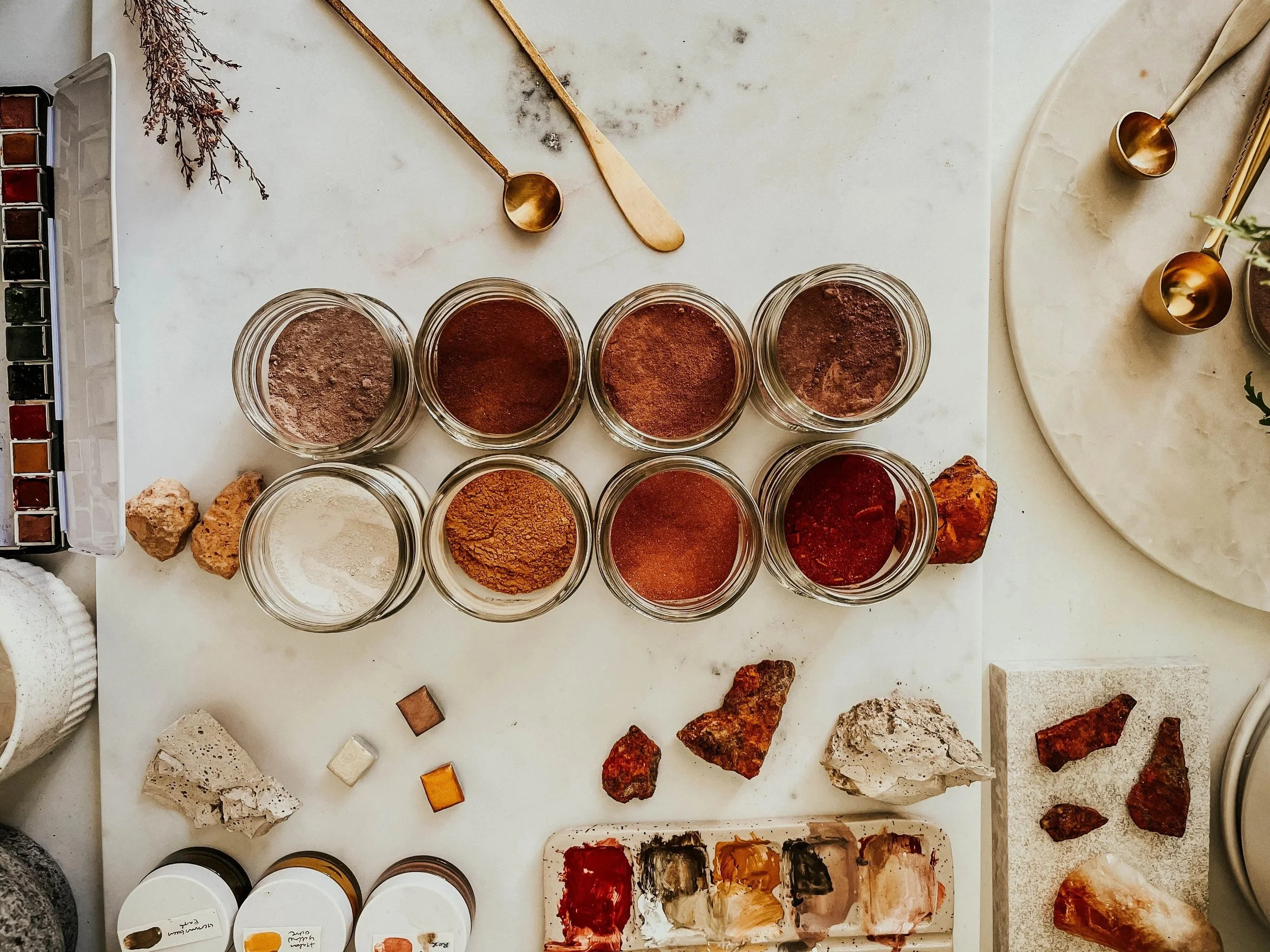
Earth pigments are natural pigments derived directly from the earth: from minerals, clays, and stones that have been used by humans for over 100,000 years. Unlike synthetic paints invented in the last century, these are the original colours of human expression.
Common earth pigments include:
Ochres (reds, yellows, browns) - Iron oxide clays found in soil and rock formations
Umbers - Manganese and iron oxide mixtures, naturally brown or a muted mauve
Siennas - Iron oxide with higher silica content, warm oranges and reds
Terre Verte - Green clay containing iron and magnesium
Chalk and Limestone - Calcium carbonate creating soft whites
Blacks - iron oxide, manganese oxide, or carbon-based pigments like charcoal
Lapis Lazuli - Crystal creating brilliant ultramarine blue (historically precious)
These aren't artificial colours trying to mimic nature. They ARE nature, transformed through the artist's hands into something that can hang on your wall and regulate your nervous system every single day.
The History of Natural Pigment Painting
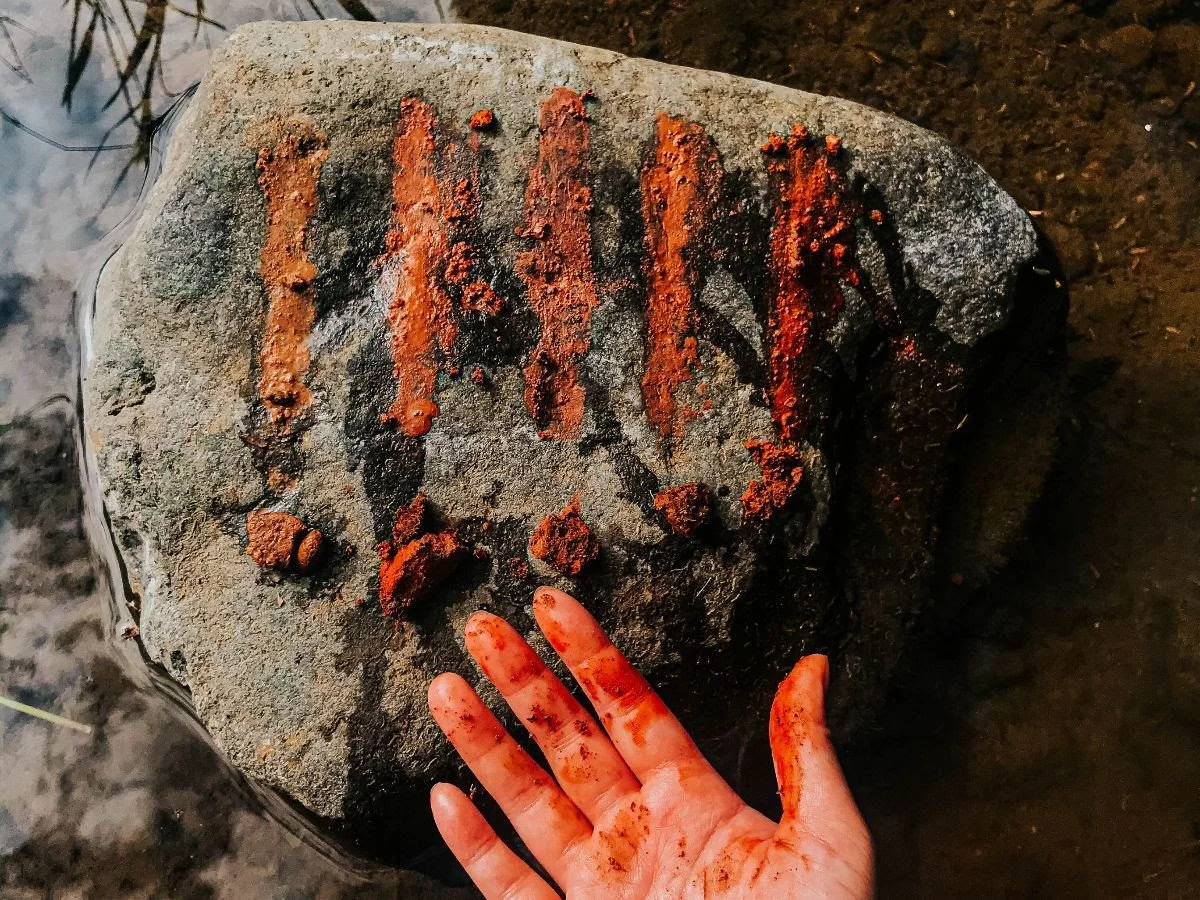
Earth pigments are humanity's first art materials. Cave paintings in Lascaux, France (17,000 years old) and Chauvet Cave (30,000+ years old) still vibrate with red ochre and carbon black. First Nations Australians have used earth pigments for 60,000 years in continuous artistic, spiritual practice.
My own spiritual earth pigment practice as it ties to lineage and place
My Indigenous Filipino ancestors have used earth pigments in cave paintings from 5,000 years ago. In my whakapapa, my ancestors (Ibanag tribe) used black earth pigments called bato’ for pricking tattoos. Ibanag nobility and their wives would have fern-like pigment tattoos on their hands, called appaku. Learning about this aspect of my whakapapa, after I had the urge to have large tattoos years ago in my 20s, helped me feel a visceral connection with my ancestors, even though in post-colonial Philippines, tattoos were taboo and frowned upon 20 years ago.
For Tangata Whenua, here in Aotearoa New Zealand where I live and work, earth pigment work is deep, sacred and is still in the process of being reclaimed from colonisation. While I can’t speak for Māori and their earth pigment practice, as Tangata Tiriti and manuhiri in Te Kawerau ā Maki whenua, my approach with earth pigments is that of a guest, intuitively connecting with the land and te taiao first from a spiritual perspective.
My Approach When Foraging
Earth Pigments
Asking for permission from the spirit of the land, and waiting for an answer, honouring the stone and land’s yes or no.
I also bring gifts to the land after foraging as a thank you, either an energetic gift like reiki or other healing frequencies, a piece of my hair, or just a thank you, to honour the reciprocal exchange with nature. One thing I’ve learned in my intuitive approach to nature is that it operates in reciprocal cycles. When you take, you give something back, and this closes the loop of giving and receiving resources from nature.
I only take what I need, usually earth smaller than my palm, and nothing more. A small soft ochre rock has lasted me years. I don’t always forage.
I also only forage on cliffside slips, riversides and tracks opened with the blessing of mana whenua, or from building sites in my local area where the ochres are safely exposed, and not forage on sites that are deeply sacred or have a history of conflict or trauma.
I also mix purchased or gifted pigments in my practice. I feel as manuhiri and Tangata Tiriti, this is important in my arts practice. Gifting pigments to Tangata Whenua (Kauae Raro) as an act of land back, or donating a percentage of art sales to Community Waitakere, and to Te Kawerau ā Maki’s Te Henga marae fundraising page.
These weren't just decorative choices. Pigments held ceremonial and spiritual significance. They tied us back to our stone and mineral kin, to our Earth Mother herself.
Throughout human history, around the world, earth pigments coloured our world. They’ve been inextricably linked to human civilisation itself.
Then came the Industrial Revolution. In the 1850s, synthetic pigments exploded onto the market: cheap, consistent and vibrant. Artists gained access to colours nature never made: cadmium yellow, phthalocyanine blue, quinacridone magenta. We gained vibrancy, and lost connection.
Today's earth pigment artists are part of a quiet revolution: returning to materials that carry geological time, that smell like rain and stone, that can't be rushed or replicated in a factory.
Why Earth Pigment Art Matters for Your Nervous System
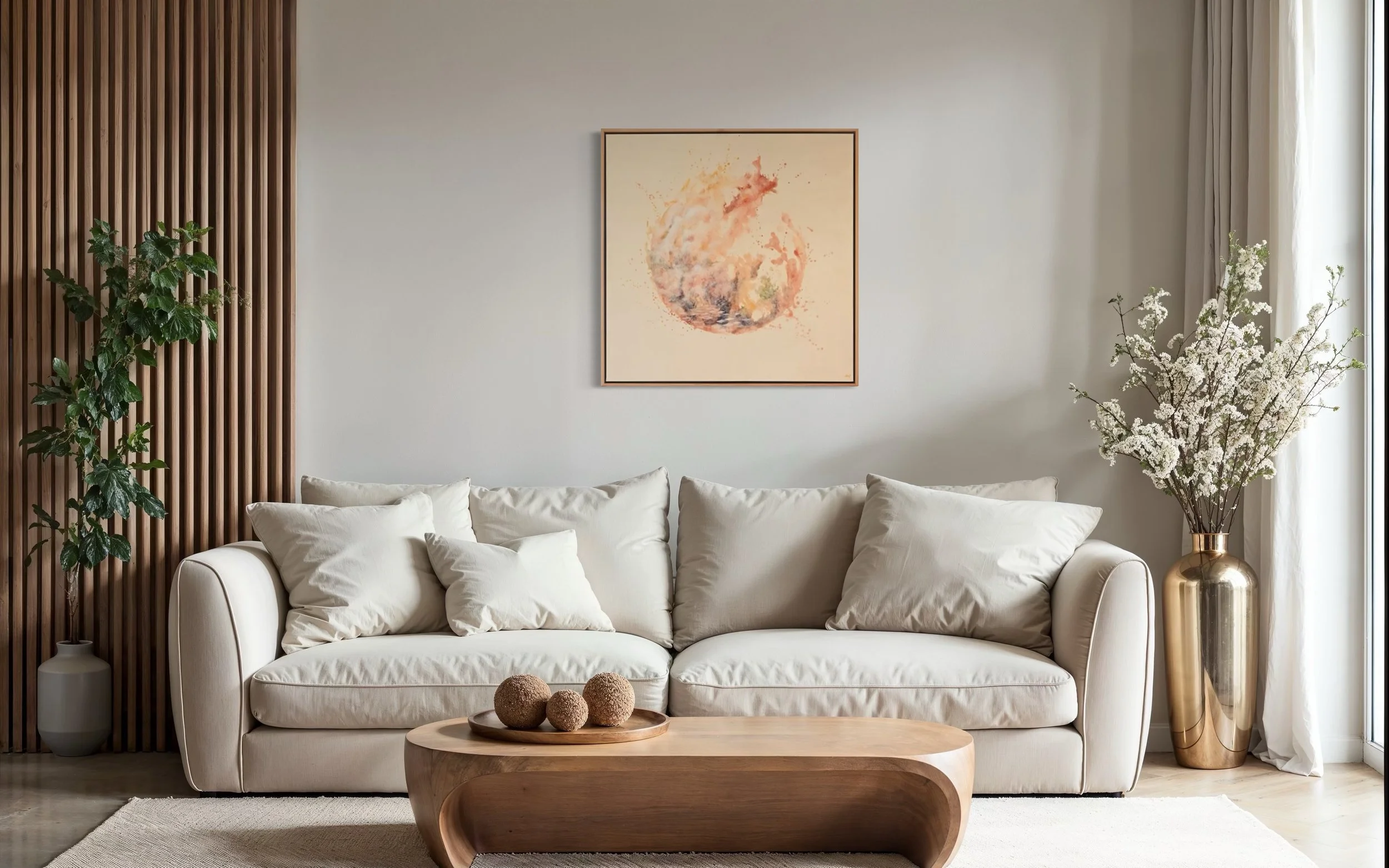
Here's what I've observed after 7 years of working with earth pigments and watching how people respond to them:
These paintings feel different because they are different.
Synthetic pigments are designed for maximum intensity. They're loud. They demand attention. For a sensitive nervous system already managing fluorescent lights, screen time, traffic, and the visual chaos of modern life, synthetic colours can feel like one more thing shouting at you.
Earth pigments whisper.
They've spent thousands of years underground and carry that patience and stillness. The colours aren't trying to be seen from across the room. They reveal themselves slowly, changing in different light, rewarding quiet attention.
Research suggests natural materials affect us differently than synthetic
While we don't have extensive studies on earth pigments specifically, related research shows:
Natural colour palettes reduce cortisol (stress hormone) more than highly saturated artificial colours
Matte, textured surfaces are less visually stimulating than glossy, reflective ones
Irregular, organic compositions calm the nervous system, while perfect symmetry can create subtle tension
Connection to nature, even symbolic through materials, activates parasympathetic (rest) response
When someone tells me, "I just feel calmer looking at your work," they're responding to a genuine physiological response that doesn't activate fight-or-flight.
Especially for the highly sensitive, the empaths, the heart-led who are also driven in this modern life:
You already absorb so much. Your environment either supports your system or depletes it. Earth pigment art creates visual sanctuary: colour that holds you, instead of demanding from you.
Earth pigments are teachers and soul medicine.
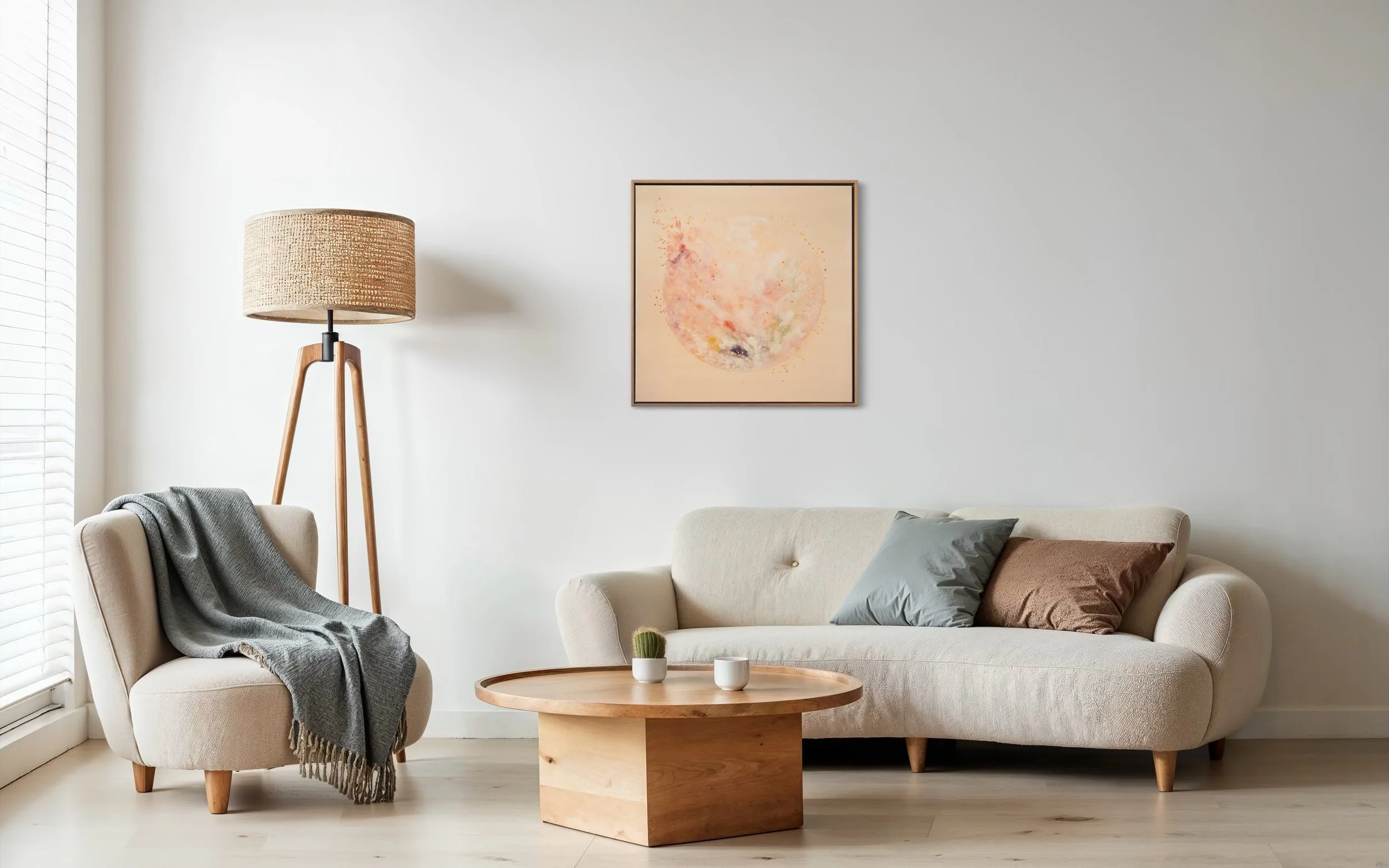
Earth Pigments vs Synthetic Pigments
This comparison will help you understand how earth pigment art vs synthetic pigment art can affect longevity in a painting, as well as the energy they bring to a room:
Earth Pigments
Great for rooms needing designs that are soft minimalist, wabi-sabi, rustic, biophilic (natural or mimicking nature), sustainable or slow iving
Colour range - Muted, harmonious, limited palette (earth tones, soft pastels from minerals)
Lightfastness - Exceptional; iron oxides are among the most permanent pigments known
Texture - Often visible grain, natural variation, living surface quality
Environmental impact - Minimal when gathered responsibly; no chemical processing
Cost - Hand-gathered and processed pigments are labour-intensive, increasing artwork value
Energy - Grounded, quiet, calming; "slow" colors that reveal subtlety over time
Synthetic Pigments
For rooms that are more stark minimalist, industrial, metallic, maximalist, vibrant colours and patterns
Colour range - Unlimited; intense colours nature doesn't produce (bright pinks, electric blues)
Lightfastness - Varies widely; some excellent, some fade quickly
Texture - Typically smooth, uniform, consistent batch to batch
Environmental impact - Chemical manufacturing, some toxic heavy metals
Cost - Generally less expensive; mass-produced consistency
Energy - Vibrant, attention-grabbing, stimulating; designed for impact
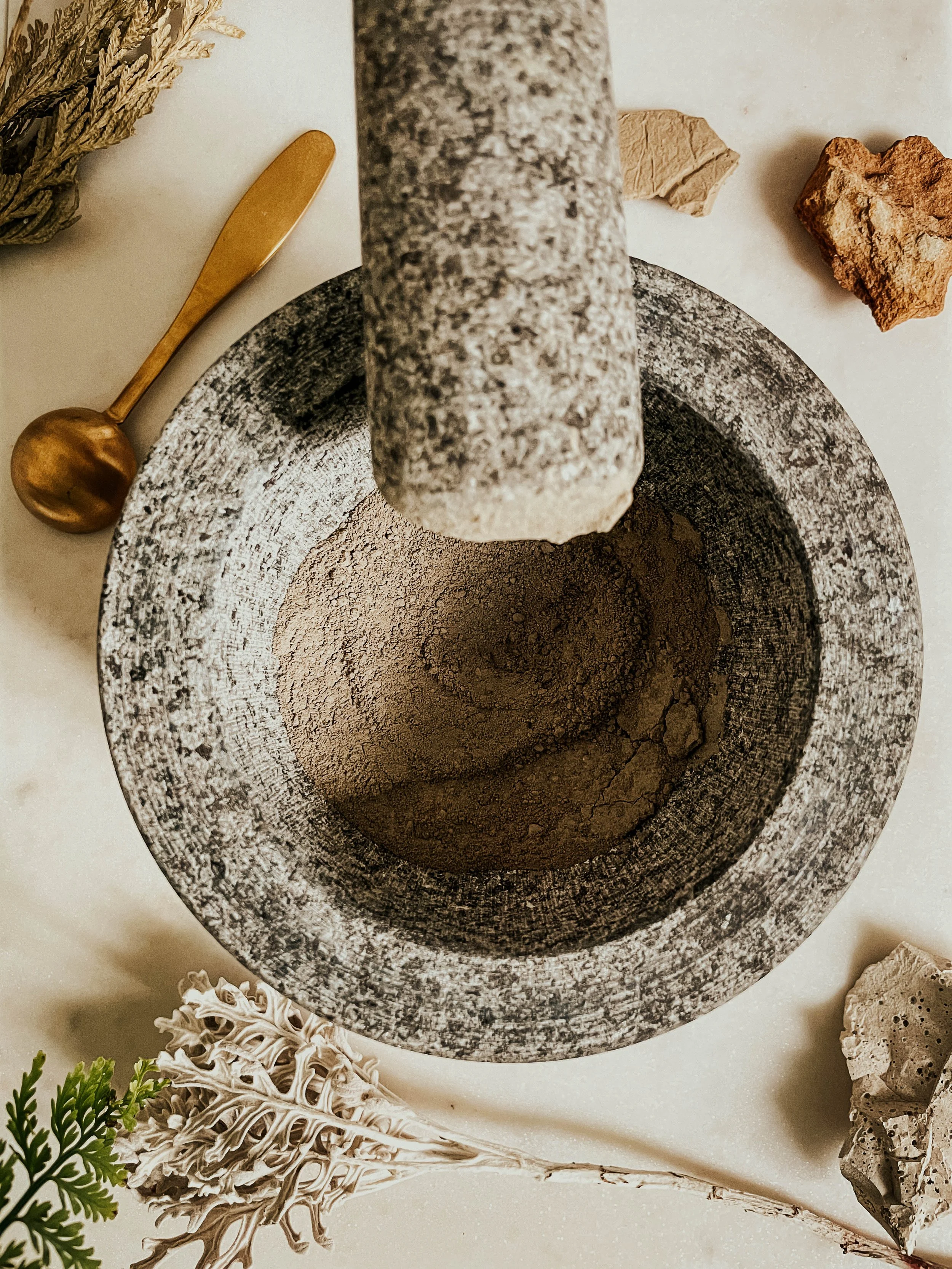
How Earth Pigment Paintings Are Made: The Process
Creating paint from earth is meditation in action. It cannot be hurried.
Stage 1: Material Gathering (Weeks to Months)
The gathering process begins with the landscape. I walk riverbeds, noticing where water has revealed clay deposits. I collect from eroded cliffsides, road cuts, and exposed earth from safe building sites, always with permission from the land and gratitude.
Stage 2: Pigment Preparation (Days to Weeks)
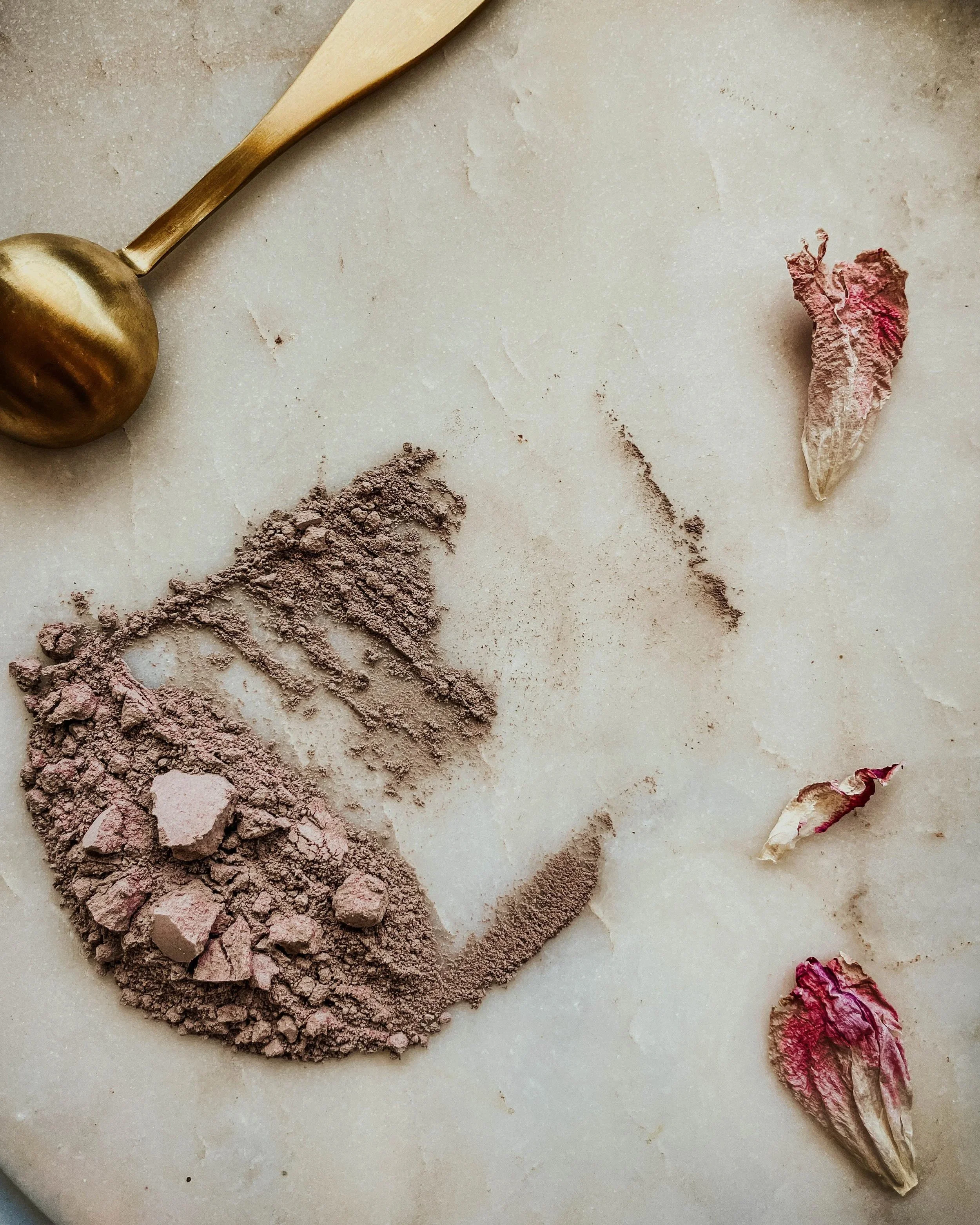
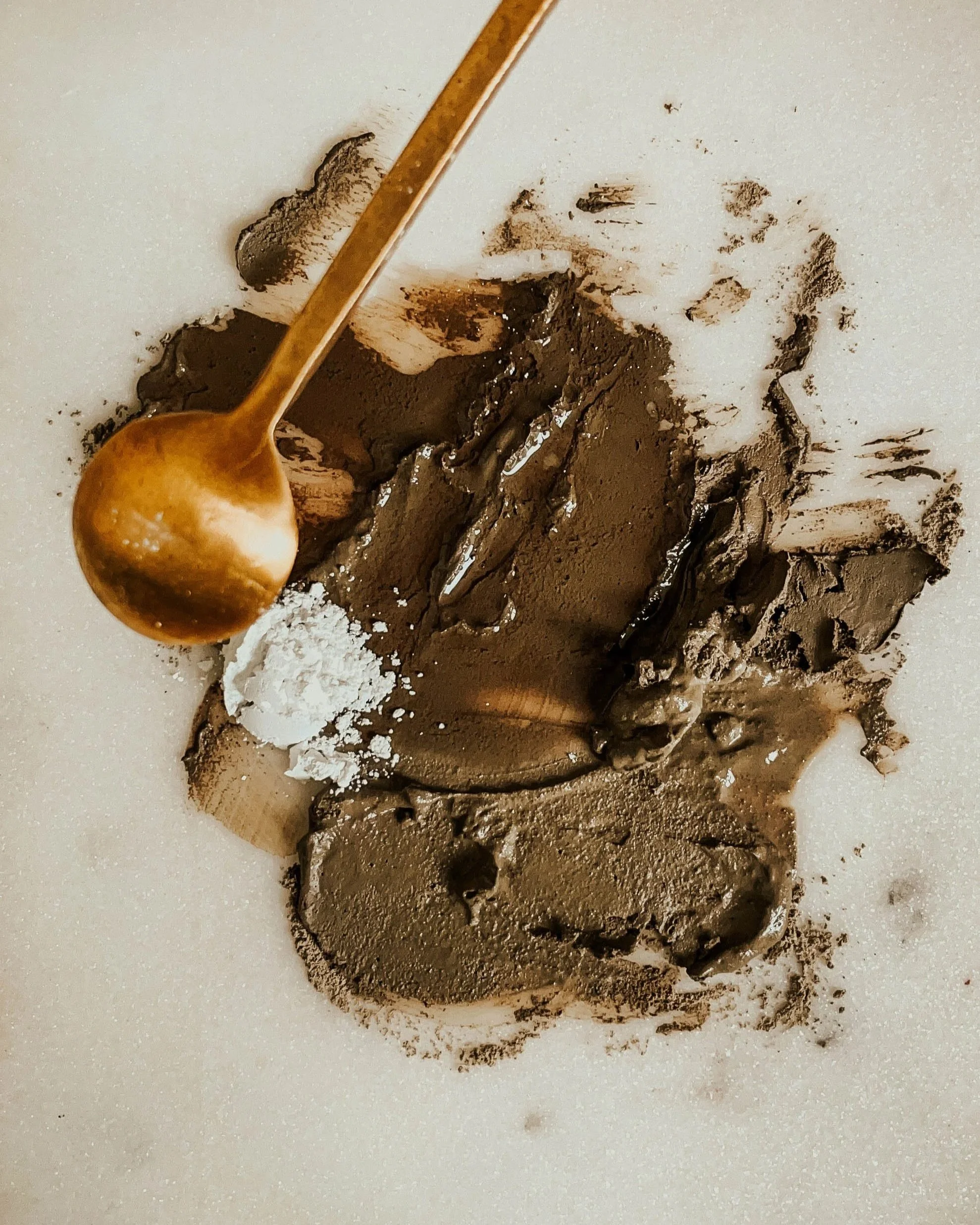
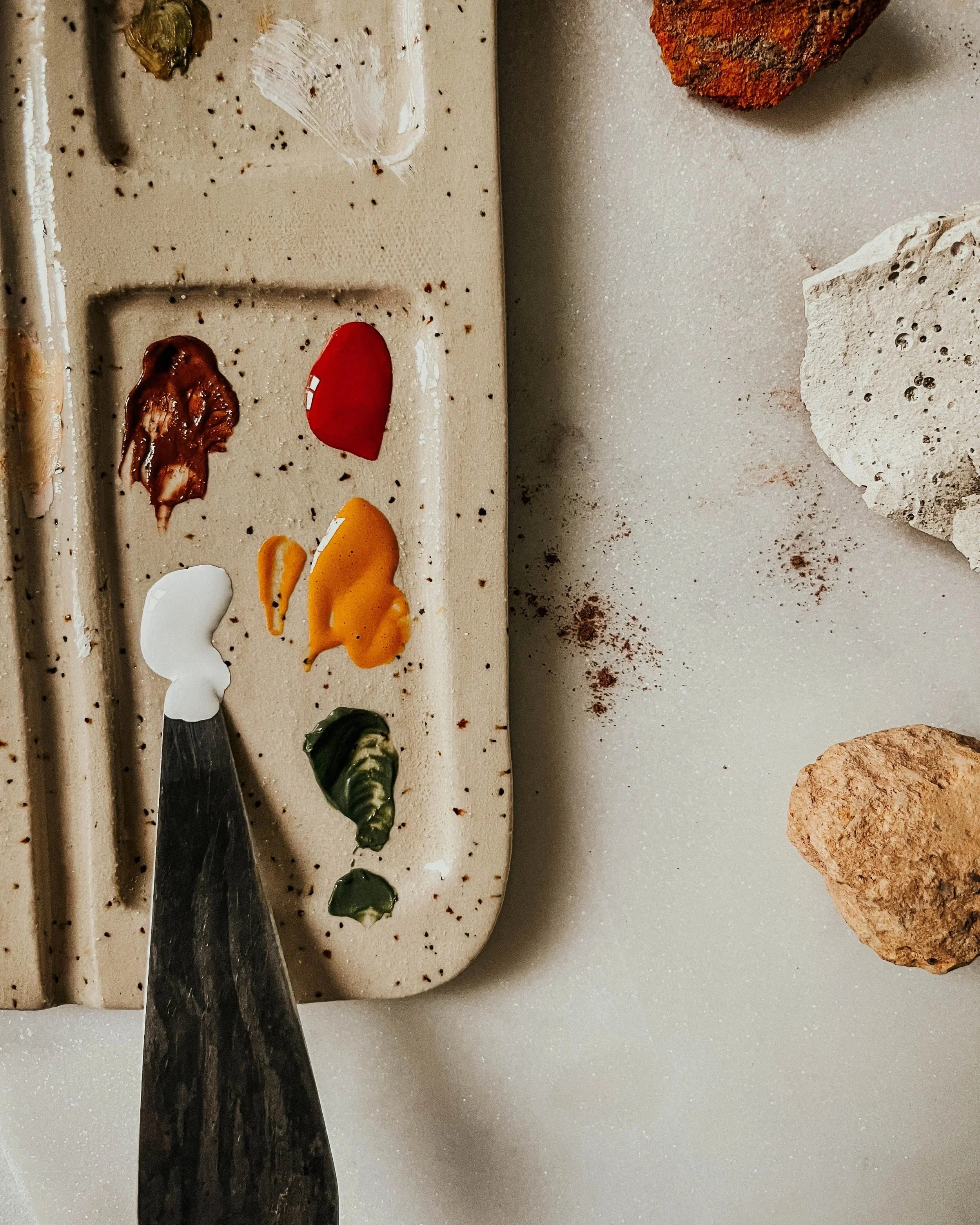
I then process the pigments with a stone mortar and pestle, or sift it through water and coffee filters to get the purest pigment. I then dry, and add binders like gum arabic and plant acrylic binders to turn pigment into paint.
Each colour requires separate processing. A painting with 12 colours means 12 individual preparation processes.
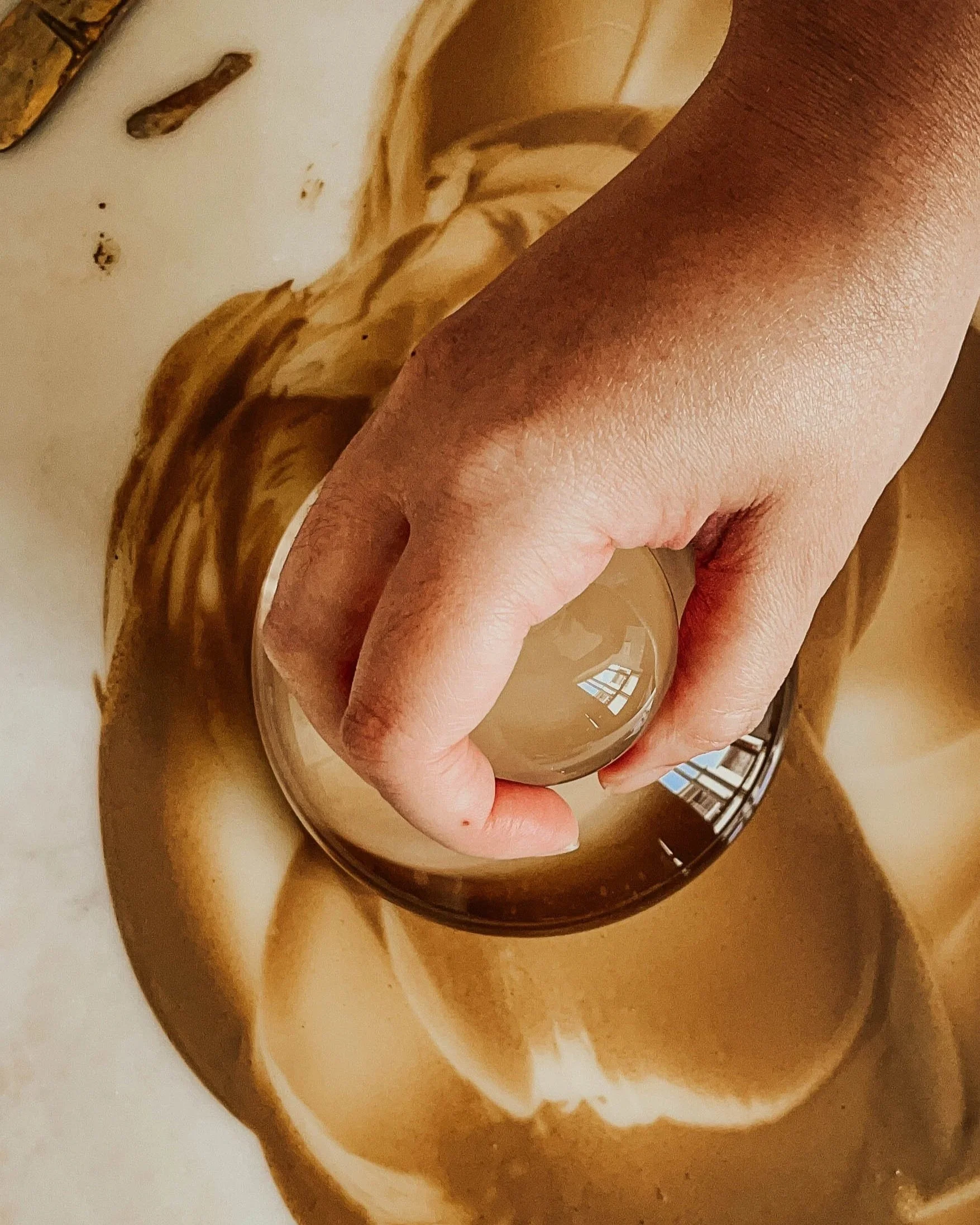
Stage 3: Ground Preparation (2-3 days)
Professional earth pigment work requires archival surfaces:
Museum-grade canvas - For longevity
Wood panels - Traditional support; provides rigid surface
Hahnemühle Archival Painting Paper - For works on paper framed behind glass. This paper has an archival rating of 100+ years.
Base layers are applied, often multiple coats of gesso, sanded between layers, creating a luminous foundation for earth pigments.
Stage 4: Painting (Weeks to Months)
Earth pigment paintings are typically built in layers. Unlike acrylic paintings that can be completed quickly, plant-acrylic and gum arabic earth pigment paint requires drying time between layers.
The process itself is meditative: mixing small batches of paint, applying thin washes, building depth slowly. It's communion with material.
This is slow art. A single painting may require months from first gathering to final varnish.

Stage 5: Varnishing and Finishing (Days)
Once fully cured, archival seals and varnish protect the surface and add subtle depth. My fine art finishing process is done in the tradition of the masters to help it last for at least 100+ years.
The painting is then ready to live in your home, an heirloom that can be passed on for generations.
Understanding how earth pigment paintings are created deepens appreciation for the work, and justifies the investment.
Investment considerations
This is why earth pigment originals command premium prices. You're not buying factory-produced decor. You're acquiring months of skilled craftsmanship and slow gathering of natural materials.
Earth pigment originals typically range from $500 for small works, to thousands for museum-quality large pieces.
Caring for Earth Pigment Paintings
Earth pigment paintings, when properly created with archival materials, are among the most permanent artworks you can own. Iron oxide paintings from ancient Egypt still hold their colour after 4,000 years.
Display considerations:
Avoid harsh direct sunlight. Indirect sunlight is all good - While earth pigments don’t fade in sunlight, it’s still a good idea to limit UV exposure for other parts of the painting, like varnish, frames and substrate.
Stable environment - Avoid extreme temperature or humidity fluctuations
Proper hanging - Use appropriate hardware for the weight
Distance from heat sources - Keep away from fireplaces, radiators, heaters
Cleaning and maintenance:
Dust gently - Soft, dry microfiber cloth or brush
Never use water or chemicals - Can damage varnish and paint layers
Longevity expectations:
Plant-based Acrylic Gouache on canvas with UV varnish: 100+ years
Works on archival paper with glass framing: 100+ years
Your earth pigment painting will outlive you, becoming an heirloom that carries not just beauty but a material connection to earth.

Why I Create With Earth Pigments
I came to earth pigments after years of burnout from both corporate achievement and the overstimulation of modern art materials. I needed my art practice itself to be a sanctuary.
The first time I was called to earth pigments came after my second spiritual awakening in 2018, when I learned to listen deeper to the land, to nature. When I learned to anchor my energy deep into the earth, and allow myself to receive nourishment from her.
Unlike my first spiritual awakening in 2012, where I learned about what was beyond our humanity, where I was being expanded into what makes us beyond human, this time, I was learning about embodiment, boundaries, and grounding: what makes us thrive as humans on the earth plane.
In 2019, I said yes to this initiation. The invitation from the land felt daunting at first. But then, a deeper part of me felt called to learn, to reconnect with the Earth as teacher. I wanted to learn how to be in relationship with her, not as a consumer, but as a co-creator.
This was the opposite of pushing, producing, optimising. This was receiving what the earth offered and transforming it slowly, with respect.
Now, every painting I create is made from earth I've touched, from places I've walked. I see nature as a co-collaborator in creating soul medicine. When someone brings one of these pieces into their home, they're inviting earth resonance into their space, the same grounding energy that calmed my own overstimulated system.

For sensitive, driven women who spend their days in fluorescent offices, on backlit screens, surrounded by synthetic everything, earth pigment art offers a different frequency. Not louder, quieter. Not demanding, grounding.
Your nervous system recognises the difference even if your conscious mind doesn't immediately understand why.
Finding Your Way to Earth Pigment Art
If you've read this far, you're likely feeling the pull towards these artworks.
For collectors: Trust the quiet attraction you feel. If an earth pigment painting makes you breathe deeper, if you keep returning to look at it, if it settles something in your chest, that's your nervous system recognising sanctuary.
Earth pigment art resonates because our overstimulated systems are starving for something real, something slow, something that carries the frequency of the actual earth beneath our feet.
In a world of synthetic everything, these paintings offer what we're all desperately seeking: a way home.
Looking for earth pigment paintings for your own sanctuary space?
Explore the collection of original paintings created from gathered earth pigments. You can also opt for a fine art print, which also holds the resonance of a piece. Each artwork carries the energy of grounding, calm, awe and wonder for your home.